
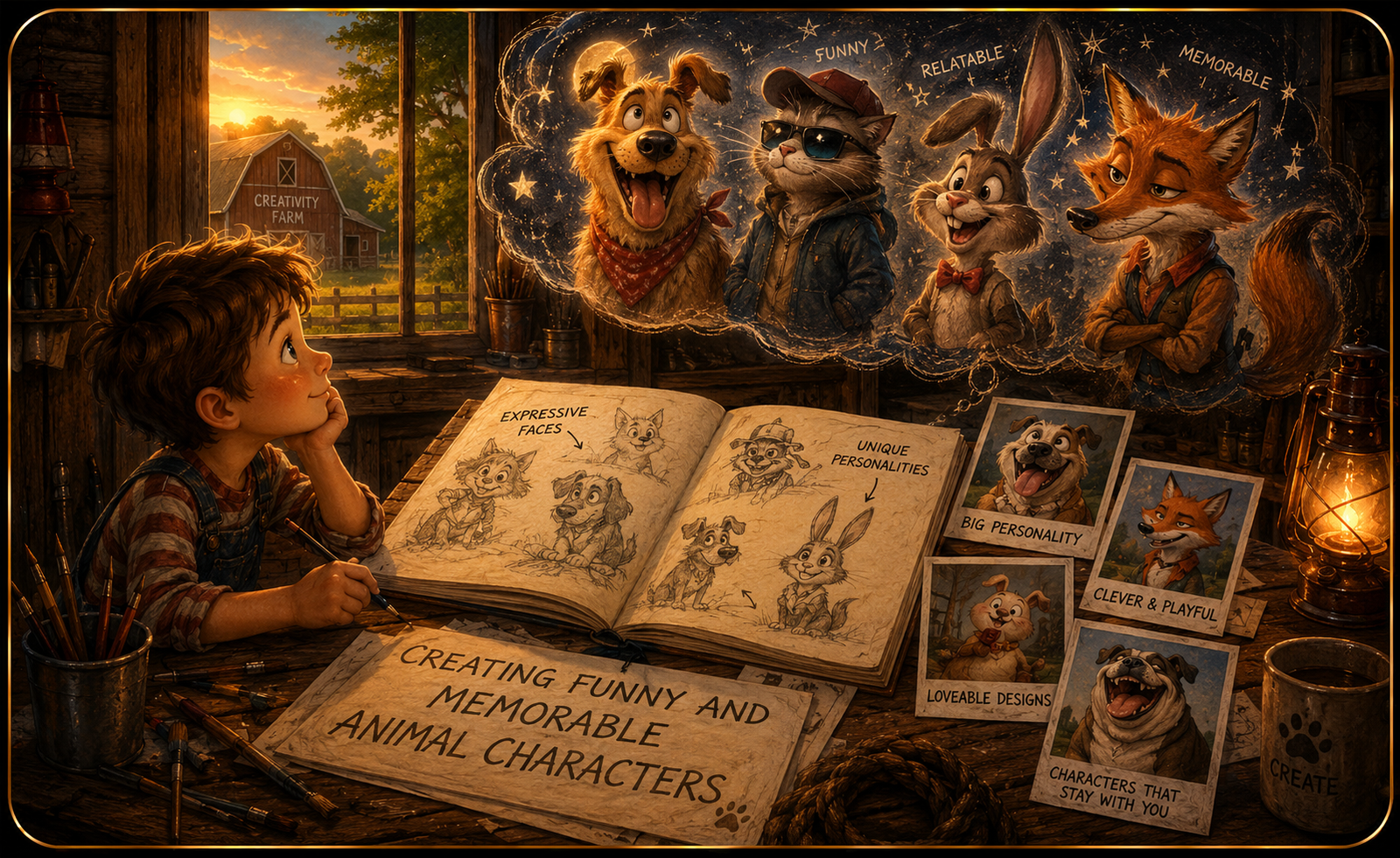
If you ask any group of young readers what their favorite part of a book is, they will rarely mention plot structure or thematic pacing. They will talk about the characters who made them burst into sudden, helpless laughter.
Creating memorable animal characters requires more than just making them cute. To make characters truly leap off the page, they need distinctive voices, genuine flaws, funny habits, and distinct points of view on the human world.
The Comedy of Contrast
The golden rule of comedic storytelling is contrast. In The Night Riders, the comedy works because no two characters view the situation in the same way:
When Ashleigh urgently announces a rescue mission to save her lost teddy bear Molly from school, the reactions couldn’t be more divided:
- Ashleigh: Driven by fierce love, determination, and boundless optimism.
- Nelson: Treats it like a full-scale tactical military operation, complete with perimeter checks and intense sniffing.
- Doughnut: Thrilled just to be invited, convinced this is the best party of the year.
- Noodles: Openly calculates whether the lost bear is worth standing out in a freezing December mist, complaining bitterly every foot of the way while secretly guarding the entire group.
Writing for Both Child and Parent
When writing books for readers aged 7 to 10, an author must remember that many of these stories will be read aloud at bedtime. That means the humor has to work on two levels simultaneously.
Children delight in the physical comedy, the witty banter, and the funny animal sounds. Parents, reading after a long and tiring workday, appreciate the dry, observant one-liners — like Noodles muttering about human foolishness or Nelson explaining why socks are superior to formal chew toys.
“When a parent and a child laugh together at the exact same sentence, the story has done its job.”
Memorable characters are like old friends. Once a child invites Ashleigh, Nelson, Misty, Myles, Doughnut, and Noodles into their imagination, those friends remain long after the book is closed and placed back on the nightstand.